Bringing Nature to the Office: Exploring Biophilic Wellness Design in Workplace Environments
- Sep 2, 2023
- 5 min read
What is Biophilia?
Before we delve into the issues of the 'typical' workplace and how we can improve these spaces with biophilic design, let's get you caught up on what biophilia actually is. This is a brief overview, if you'd like to learn more about biophilia and how this relates to architectural design, check out past posts on the Everday Biophilia blog.

So, what is biophilia? When we refer to biophilia we are discussing humans' innate attraction to nature and living things. The term biophilia was coined by Erich Fromm in 1964 and later gained popularity through Edward O. Wilsons' hypothesis in 1984. Wilson hypothesised these connections as evolutionary inherited responses; this further introduces the theories of biophobia, our inherited fears, such as a fear of snakes, confined spaces, and other threats presented in nature.
Biophilic design incorporates these theories into internal spaces; through elements that increase our connection to nature and reduce biophobic responses, to create spaces that we can find relaxing, peaceful, and restorative. Elements of biophilic design can be incorporated to suit a range of budgets, drastic changes aren't needed to incorporate biophilia into your everyday environment.
Observing the 'Typical' Office: The Issues of Workplaces
Where do we start? First of all, let's identify the typical office. Lighting is a key feature of the working environment, If poorly addressed lighting can cause health issues and slow productivity, for example, overexposed natural daylight, often the case with South facing windows, can cause harsh bright light into spaces and create a straining glare. Similar effects can be seen with inadequate artificial lighting. The presence of natural daylighting has been shown to create an uplifting effect on our mood; leading to better productivity and performance.
Next up, let's look at the typical office layout; often office spaces will see desks crammed into a small space, with walls of monitors and tangled wires on display; Low dividers between desks can improve productivity by reducing distractions, and this can also help to reduce the viewing of wires, which can create stress responses due to the overcomplex depth and organisation. The layout of rows of desks can be unavoidable, dividing these spaces with screens and planting will help to reduce distractions and increase the level of comfort and ease. Discover more ways to improve your office layout in the next section.
Airflow, ventilation, and temperature can be major issues in offices; overheating can cause reduced productivity and comfort. Poor airflow and ventilation create 'stuffy' rooms; it has been discovered that HVAC that mimics natural changes of the wind benefits productivity and internal comfort, in contrast, strong direct fans can be discomforting.
Looking to Biophilia: How To Improve Workspaces, Productivity and Experience





Let's talk about lights. It's not uncommon knowledge that natural daylighting is usually preferable to artificial sources of lighting, so why is daylight beneficial? Exposure to daylight helps attune our bodies' natural circadian rhythm, when choosing the right lux of light for a space we need to consider the time of day the functioning space will be used, lower brightness, and warmer hues for spaces that are used in the early morning or evenings help to maintain our bodies circadian rhythm, this means that we get better quality sleep which results in better focus for the following day. However we are discussing workspaces, so low lux lighting is not always appropriate, ways that we can reflect this into practice may be; if you are working before sunrise or past sunset, to lower the brightness on your device screens, and turn off harsh bright lights in favour for softer yellow/ warm lighting.

How's the layout? An effective change for rows of desks, whilst keeping the same layout if the flow of the space is functioning well, is to implement desk dividers. These screens increase productivity by reducing surrounding distractions. They also help the space to look neater, hiding wires and desk accessories. As well as low screens between desks, if the office space is relatively open plan you could divide spaces with screens or planting, reducing visual and noise disturbances. Increasing focus coincides with better productivity, so small changes can present a big impact for the workspace.
Function and flow are important qualities of spaces, this will differ between offices depending on the space available and how it is used. If possible consider changing the layout of desks to easily create a 'new' space as this change will be mentally stimulating and presents no cost.

Let's let the air flow. Ventilation and airflow can be an expensive or inexpensive change, depending on the issues and budget. Manual ventilation refers to opening windows, this is an effective option for low budgets, opening adjacent windows will create cross-ventilation in a relatively easy fix. In spaces where opening a window is not possible, try using floor fans; although try and place this away from high-functioning areas, as the constant and close movement from a fan can be uncomfortable. Fans that mimic natural varying wind flow are preferable. Now onto the expensive option, implementing or improving HVAC systems, the control of temperature and ventilation takes this option into the lead.
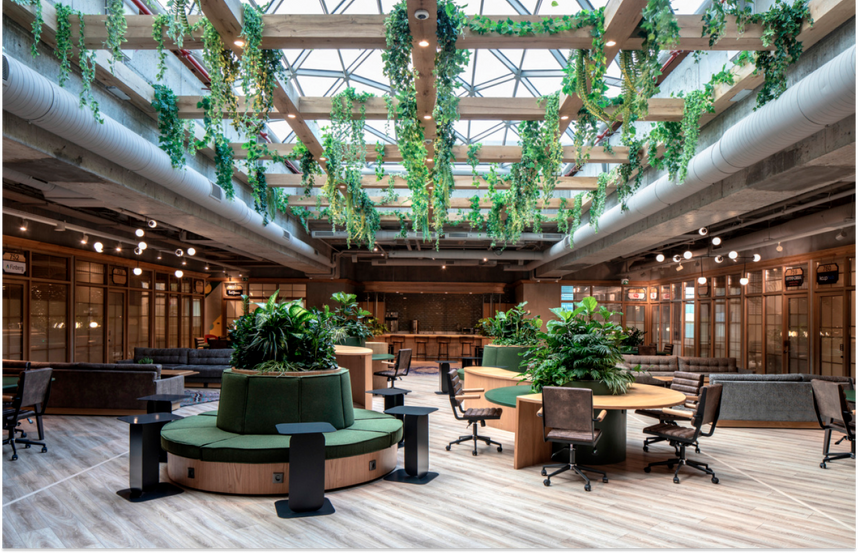
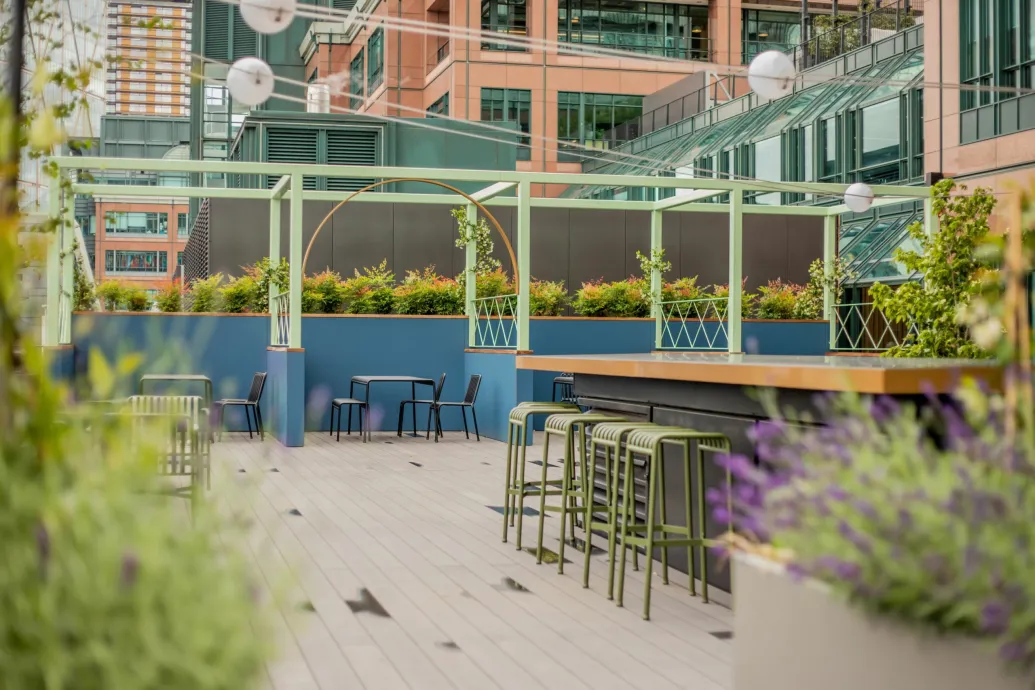
Views of nature and natural elements are possibly the first thought that comes to mind when we discuss biophilia. Proven to have many effects for improving productivity, wellness, and reducing stress; viewing nature and physical connection is a stimulating experience for the mind. Introducing physical planting is not always possible, instead, try faux plants or static views of nature in the form of artwork and photography. In addition, incorporating natural elements and materials such as timber, stone and water, plays a similar effect on the mind.

Incorporating Theory into Space
When you imagine your work environment, what do you see? Is it light or dark? Is it too light, does the sun reflect on your screen? What do you hear? Is it a quiet space? Is it disruptive? Has your attention gone to the sound of the coffee machine behind you or the road outside just by picturing it? How are you sat? Are you hunched over or are your feet flat on the floor?
How you picture your space through this simple exercise may help you to identify the negative aspects of your working environment. Most of the time, these are small easily changeable fixes. The next step is to implement change, reduce the issues you've identified and create a better space. If you need some inspiration, please comment on the issue you think you're facing in the comments below our on our community forum page, and hopefully, we can help you out.
Need Some Help?
If you'd like assistance in identifying the opportunities in your interior spaces and discovering how you can bring biophilia into your every day, you can contact me today or book a 1-1 consultation. With a strong knowledge of biophilic design and a background in interior architecture and interior design, I can easily help you to create the perfect environment for your needs.


Comments